
Quick Summary
To choose a heavy duty fishing gaff, match its length to your boat's freeboard, the height of the gunwale above the water, and size the hook and shaft to the fish you target. Then check hook bond, blank diameter, corrosion resistance and warranty before buying.
- Measure freeboard where you actually gaff fish, not at the stern or bow.
- Under about 24 inches of freeboard, choose a shorter gaff for easier handling.
- Over about 36 inches of freeboard, you need a longer gaff to reach the surface.
- Fish over 100 pounds call for a 4-inch hook and 1-inch blank.
- Choose a single-piece hook bonded with epoxy, not pinned, to avoid blank splits.
Table of Contents
- Why Heavy Duty Fishing Gaffs Need Careful Selection
- Matching Fishing Gaff Length to Your Boat and Target Fish
- Choosing the Right Fishing Gaff Hook Size, Gape and Shape
- Heavy-Duty Fishing Gaff Materials, Corrosion Resistance and Load
- Fixed, Flying and Hand Gaff Types: Which Suits Your Fishing
- Comparing the Best Fishing Gaffs and Their Pricing
- Gaffing Safely and Maintaining Your Gaff
- Choosing Your Heavy Duty Gaff Before Your Next Trip
- Frequently Asked Questions
Why Heavy Duty Fishing Gaffs Need Careful Selection
Last Updated: November 19, 2026
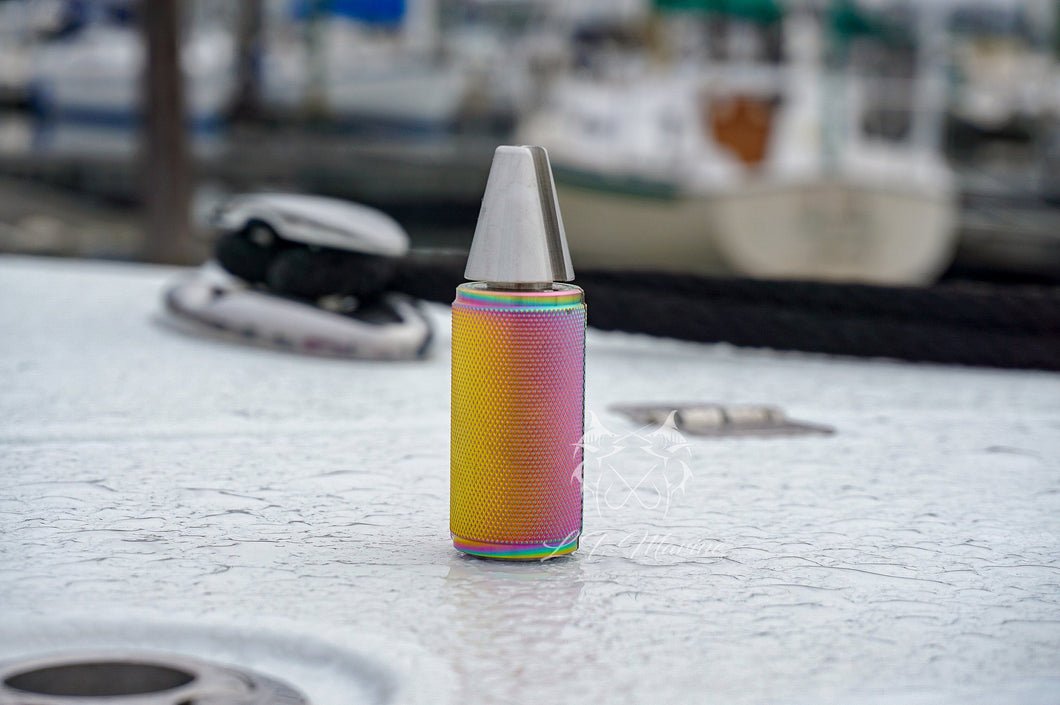
A heavy duty fishing gaff is the tool that turns a hooked fish into a fish in the boat, and a gaff that fails at that moment can cost you the fish, the gear and sometimes a hand.
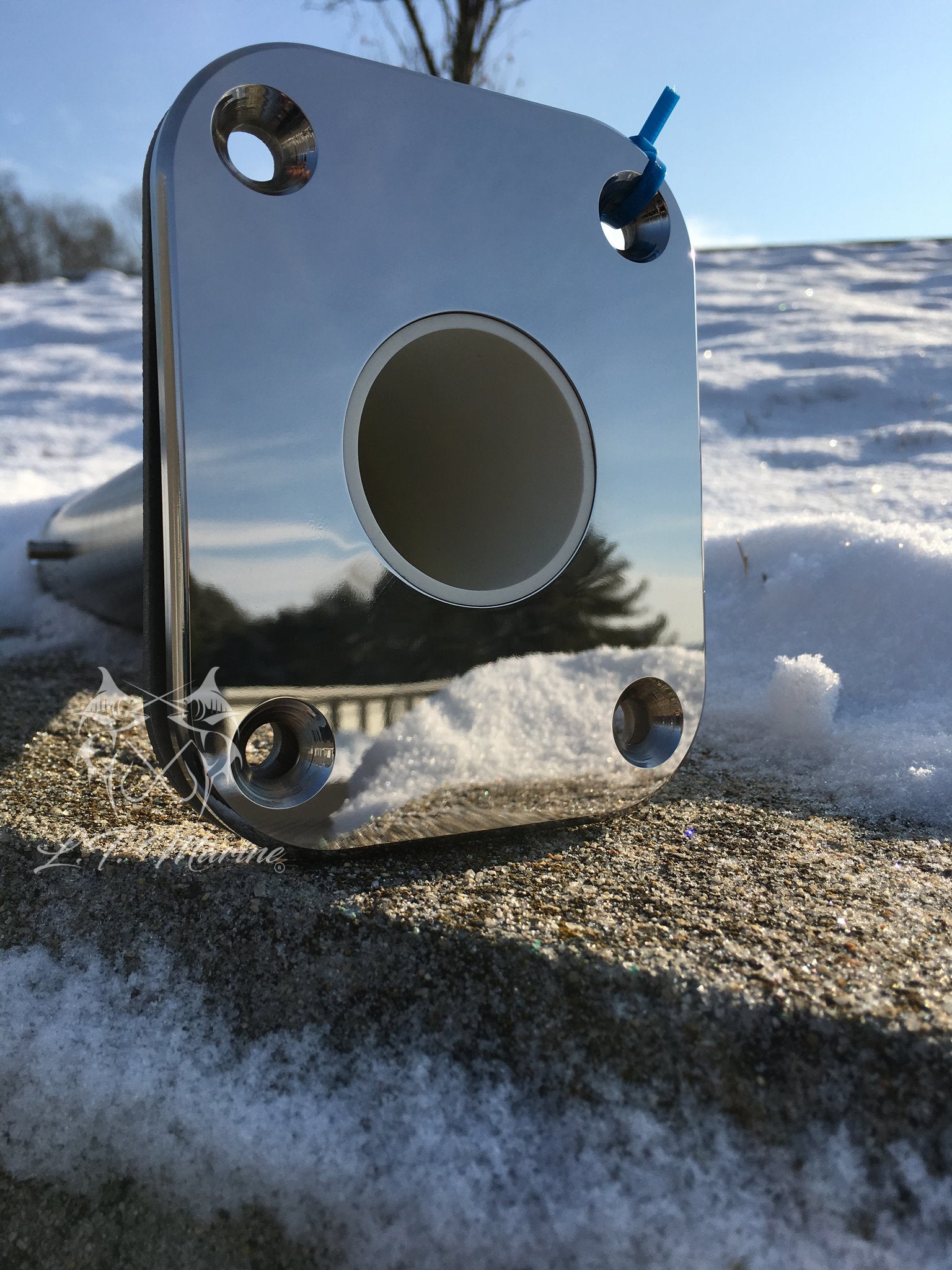
Most anglers buy a gaff once and rely on it for years, so the first decision matters. A gaff that is too short leaves you reaching over the gunwale with a bent back and no use.
Work through length, hook, materials and gaff type in that order, then check the safety and maintenance notes before you buy.
Matching Fishing Gaff Length to Your Boat and Target Fish
Gaff length is the first measurement to get right, and most guides stop at "match it to your boat." That advice is incomplete.
You need enough reach to set the hook into the fish at the water's surface without leaning past the gunwale, and enough control to lift the fish once it is hooked. Too much length is hard to swing in a tight cockpit and invites the hook into rigging or crew.
Short Versus Long Gaffs and Boat Freeboard
Freeboard is the distance from the waterline to the top of the gunwale. Measure it where you actually gaff fish, not at the stern or bow. The higher your freeboard, the longer the gaff you need to reach a fish at the surface without overextending.
- Low freeboard (under about 24 inches, typical of skiffs and small center consoles): A shorter gaff keeps the handle manageable and avoids snagging on rigging. A compact carbon fiber model works well here.
- Medium freeboard (roughly 24 to 36 inches, most sportfishing boats): A mid-length gaff gives reach without making it awkward to swing in a crowded cockpit.
- High freeboard (over about 36 inches, towers and larger offshore boats): A longer gaff is necessary. Measure from the gunwale to the water, then add a margin for the hook to reach the fish and for the angle of the swing.
A common mistake is buying the longest gaff available because it seems safer. In practice, a gaff you cannot control is less safe than a shorter one you can. Match length to freeboard first, then adjust for fish size.
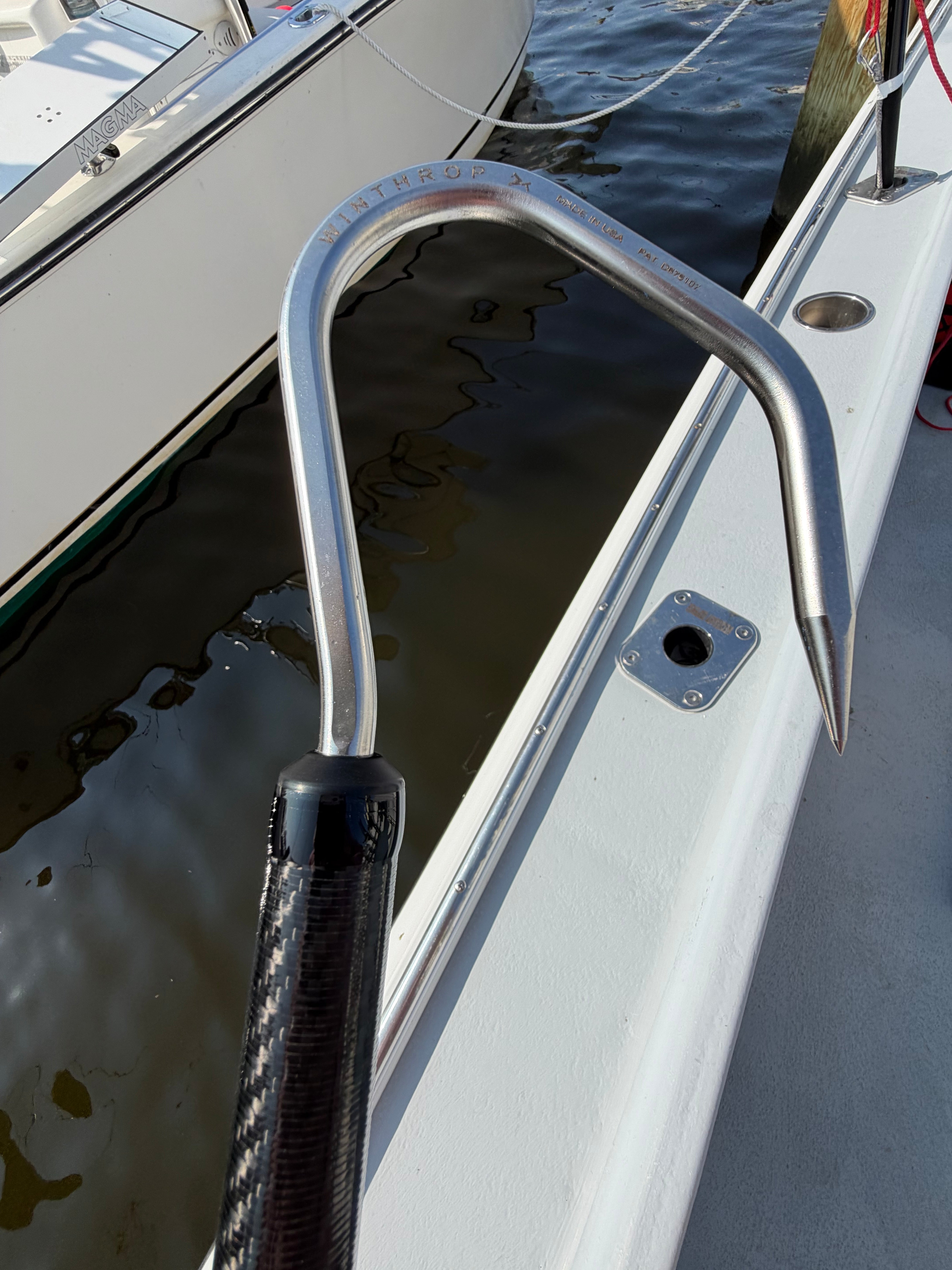
A Practical Sizing Chart by Fish Size and Species
Use this chart as a starting point. It pairs hook size and blank diameter with the species and fish weights the manufacturer recommends for our carbon fiber line, so verify your target fish before choosing.
| Target Fish | Typical Weight Range | Recommended Hook Size | Gaff Blank Diameter | Suggested Handle Length by Freeboard |
|---|---|---|---|---|
| Kingfish, mahi, wahoo | Up to about 50 lbs | 2" or 3" | 3/4" | Low: 4-5 ft; Medium: 6 ft; High: 8 ft |
| School tuna | 10 to 100 lbs | 2" or 3" | 3/4" | Low: 4-5 ft; Medium: 6 ft; High: 8 ft |
| Big eye and yellowfin tuna | Over 100 lbs | 4" | 1" | Low: 5-6 ft; Medium: 6-8 ft; High: 8 ft |
| Swordfish | Large offshore fish | 4" | 1" | Medium: 6-8 ft; High: 8 ft |
| Giant bluefin tuna | Large offshore fish | 4" | 1" | High: 8 ft |
If your fish fall between categories, choose the larger hook and the longer handle within your freeboard range.
For a quick field check, hold the gaff at the angle you would use to strike and see whether the hook reaches the waterline without your shoulder passing the gunwale.
Choosing the Right Fishing Gaff Hook Size, Gape and Shape
The hook does the holding, so its dimensions matter as much as the handle. Hook size is usually given as the length of the hook point from the shank.
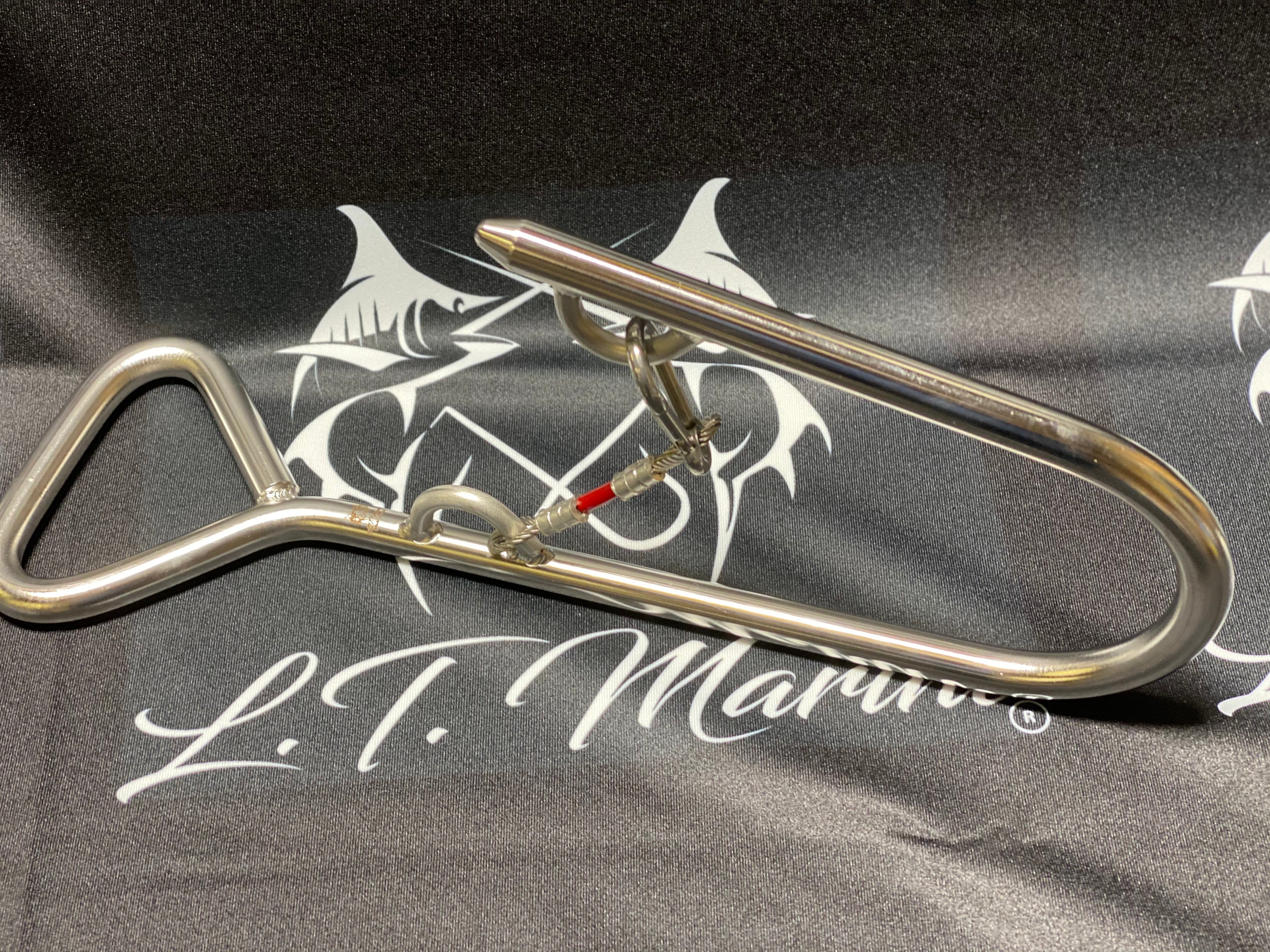
A wider gape gives a larger bite on a thick fish, but it needs more steel to avoid bending.
Watch for these hook problems before you buy:
- A hook that looks thin for its size will straighten under a heavy fish.
- The point should be sharp enough to penetrate on the first shot.
- The hook should be bonded properly into the blank, not just pinned.
Our Winthrop and Winthrop J hooks come in 2", 3" and 4" sizes. Pick the size from the sizing chart above rather than the size that looks most impressive.
Heavy-Duty Fishing Gaff Materials, Corrosion Resistance and Load
The shaft has to carry the full weight of the fish plus the force of the lift, and the hook has to hold that load without straightening or pulling out. Most buying guides describe materials in general terms; this section breaks down the construction specifications that separate a heavy-duty gaff from a light-duty one, and the trade-offs between materials in saltwater use.
Shaft Diameter, Wall Thickness and Stiffness
Blank diameter is the most visible specification, but wall thickness and layup matter just as much. A 1-inch carbon fiber blank with a thin wall can flex more than a 3/4-inch blank with a heavier layup.
- 3/4-inch blanks suit fish up to roughly 100 pounds and keep the gaff light enough to swing one-handed.
- 1-inch blanks are the heavy-duty choice for fish over 100 pounds and for any situation where the gaff may be used to lift, not just hold.
Anglers often underestimate lift force. A 100-pound fish at the surface can produce a shock load several times its weight when it surges against the hook. The blank and the hook bond have to absorb that load without permanent deformation.
Hook Steel, Welds and Bond Strength
The hook is where heavy-duty gaffs most often fail. Look for a hook made from a single piece of steel rather than a welded assembly, because welds introduce a heat-affected zone that can crack under shock loading. If a hook is welded, the weld should be full-penetration and dressed smooth, with no undercut at the toe.
The point should be sharp enough to penetrate on the first shot and thick enough not to roll over on a fish with tough skin. A poorly cut barb weakens the point.
Material Trade-Offs: Carbon Fiber, Aluminum and Fiberglass
Each shaft material involves a trade-off between weight, stiffness, corrosion resistance and cost.
- Carbon fiber offers the highest stiffness-to-weight ratio and resists fatigue better than aluminum. It is a material used in our heavy duty line, built from more than 10 layers of high strength 3K carbon fiber prepreg. The trade-off is higher upfront cost and the need to avoid pinning or impact damage that can crack the matrix.
- Aluminum is less expensive and tolerates impact better than carbon fiber, but it is heavier and can bend permanently under a load carbon fiber would survive. It also corrodes in saltwater if the finish is breached, so inspect for scratches and rinse after each trip.
- Fiberglass is the heaviest and least stiff for a given diameter, but it is inexpensive and forgiving. It suits light-duty use and backup gaffs rather than primary heavy-duty work.
Corrosion Resistance and Maintenance
Corrosion resistance deserves attention because saltwater is hard on any gear. Look for a sealed transition from the hook to the blank, which keeps water out of the epoxy joint. Our carbon fiber gaffs use a sleek transition designed to prevent water intrusion and epoxy degradation in saltwater.
After each trip, rinse the gaff in fresh water, dry it, and inspect the hook-to-blank transition for cracks or loose bond. Check the warranty before you buy; our carbon fiber gaffs carry a 2-year warranty against carbon fiber breakage when used properly.
Fixed, Flying and Hand Gaff Types: Which Suits Your Fishing
Gaffs come in several types, and each suits a different style of fishing.
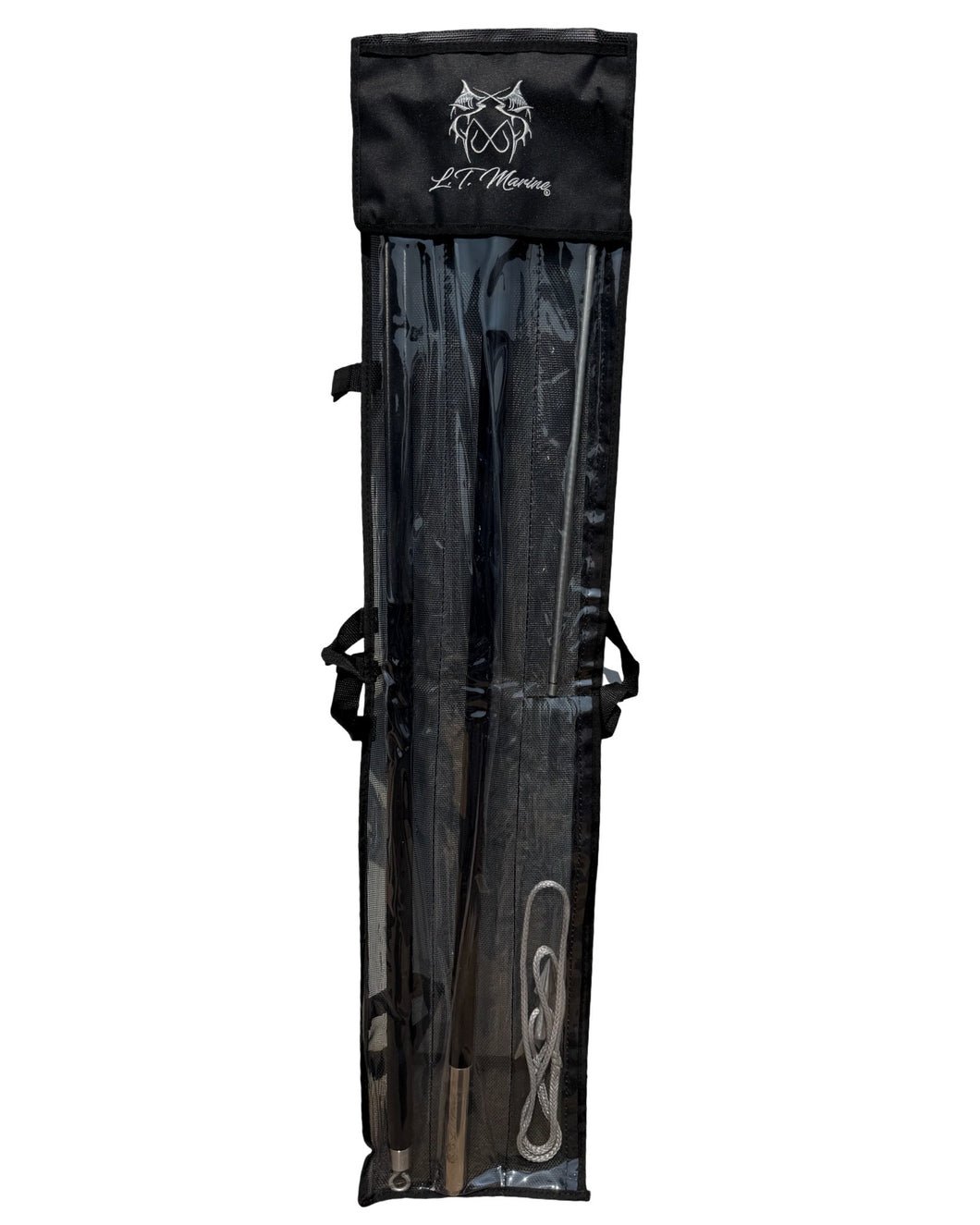
- Fixed gaffs stay attached to the handle. They are the most common choice for boat-side work and are simple to use.
- Flying gaffs have a hook that separates from the handle and is tethered by a line. They are used for large fish that might otherwise pull the handle away, letting the hook do the work while you keep control of the line.
- Hand gaffs are short, shaped for one-handed use and suited to smaller fish or quick shots in tight spaces.
For most anglers working medium to large fish from a standard sportfishing boat, a fixed gaff covers the job.
Comparing the Best Fishing Gaffs and Their Pricing
Prices are the list prices in USD.
| Gaff | Price | Hook Options | Handle | Best For |
|---|---|---|---|---|
| Extreme HD Carbon Fiber Gaff | $300.00 | 2", 3", 4" Winthrop or Winthrop J | 3/4" or 1" carbon fiber | Kingfish, mahi, tuna, swordfish |
Pros of the Extreme HD Carbon Fiber Gaff:
- Light and floats if lost overboard
- Rigid for precise control on lifts
- Cello-wrapped textured grip for choking down on the gaff
- 2-year warranty against carbon fiber breakage
Price matters, but so does what the gaff replaces. A failed gaff on a large fish costs more than the price difference. Compare specifications and warranty, not just the sticker price.
Gaffing Safely and Maintaining Your Gaff
Gaffing requires a controlled, deliberate action. Keep your footing firm, keep the gaff close to your body and avoid reaching past the gunwale. Set the hook into the fish's body, not the tail or fins, and lift with your legs rather than your back.
Address any cracks or loose bonds before the next outing, not after a fish is on.
For questions about mounting, care and storage, see our rod holder FAQs.
Choosing Your Heavy Duty Gaff Before Your Next Trip
Start with the fish you actually catch and the freeboard of your boat. Use those two measurements to set gaff length and hook size. Then check the material, the hook bond and the warranty. Pick the type, fixed, flying or hand, that suits how you fish.
Our Extreme HD Carbon Fiber Gaff is built for anglers who want a rigid, floating tool for fish from kingfish to swordfish.
Frequently Asked Questions
What is the best fish gaff?
The best fish gaff depends on the species and boat. For tuna over 100 pounds, swordfish and giant bluefin, a 4-inch hook on a 1-inch diameter handle is the typical match. For kingfish, mahi, wahoo and school tuna between 10 and 100 pounds, a 2- or 3-inch hook on a 3/4-inch handle works well. Carbon fiber handles are lighter than aluminum, stronger, and float if lost overboard, which makes them a strong choice for offshore use. Match hook size to fish size first, then weigh handle material and length against your deck space.
How long should a fishing gaff be?
Gaff length should let you reach the fish alongside the boat without leaning far over the gunwale. Shorter gaffs suit low-freeboard boats and smaller fish, while longer gaffs help when the boat sits high out of the water or when you need reach to lift a large fish over the side. Consider your deck layout, where you stand to gaff, and how much control you need during the lift. Measure your freeboard before buying so the gaff you choose matches your actual reach.
What size fishing gaff do you need for offshore fishing?
For offshore fishing, size the gaff to the largest fish you expect. Tuna and swordfish usually call for a 4-inch hook, while mahi, wahoo and kingfish are well handled by 2- or 3-inch hooks. Heavier handles give more control on big fish, but they add weight to handle on deck. Many offshore crews keep two gaffs onboard so one remains ready if the first breaks or a second fish needs a quick shot.
What materials make a fishing gaff durable in saltwater?
Durability in saltwater depends on handle material, hook construction and how the hook is bonded to the handle. Carbon fiber handles built from many layers of high-strength 3K prepreg resist shock and fatigue better than aluminum and weigh less than fiberglass. A sealed transition from hook to blank keeps water out and protects the epoxy bond. Rinse the gaff with fresh water after every trip, dry it, and inspect the hook and bond regularly for wear or damage.

